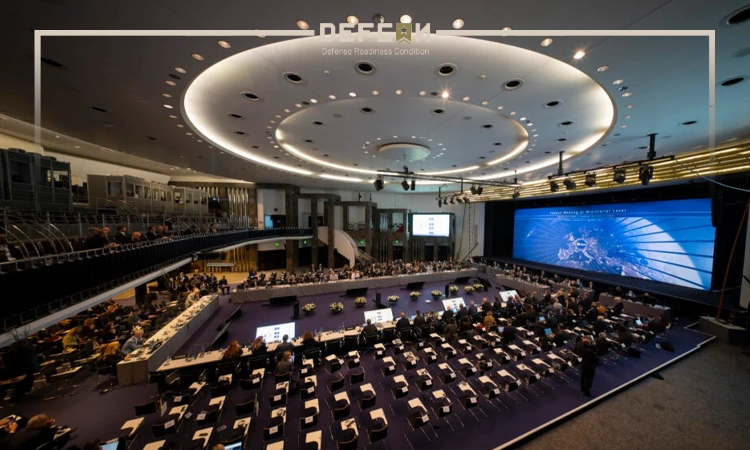
The European Space Agency (ESA) has approved a new three-year spending plan worth €1.35 billion, marking the first time the agency directly funds space-defense support programs across its 23 member states. ESA described the decision, issued during the Council of Ministers meeting in Bremen, Germany on November 27, as a “historic shift” for an organization that has maintained a strictly civilian identity for five decades.
ESA stated that allowing the use of space applications for non-offensive defense purposes represents a major step toward strengthening Europe’s technological autonomy in space and reducing external dependency—particularly as concerns mount over Russian threats to space infrastructure and growing European unease about relying on the United States for military space capabilities.
At the heart of this shift is the **European Resilience from Space (ERS)** program, which will initially focus on developing dual-use technologies to support a new governmental Earth-observation satellite network, as well as a new navigation program based on satellites operating in low Earth orbit. The agency also left the door open for expanding the program to include additional security-related capabilities, pending member-state discussions over the coming year.
Although ESA is independent from the European Union, its budget is funded through mandatory contributions based on national GDP, as well as optional contributions tied to national priorities. ERS funding represents only a small share of a much larger **€22 billion budget** approved for 2025–2027—an increase of 32% compared to the 2022 budget, according to ESA Director General Josef Aschbacher during a press conference following the meeting.
Space-launch programs remain the largest budget category, receiving €4.4 billion to support development of the **Ariane 6** heavy-lift rocket and the **Vega-C** medium-lift launcher, in addition to the **European Launcher Challenge**, an initiative to cultivate a competitive ecosystem of commercial launch providers within Europe.
Through these initiatives, Europe aims to narrow the gap with U.S. company SpaceX, which dominates the global launch market with its Falcon-9 rocket. In July, ESA selected five European companies to compete within the new launch program, with the first demonstration flights scheduled for 2027.